Why Old Scars Could Be the Culprit Behind Your Current Pain
The Hidden Impact of Scar Tissue on the Body
Many people are surprised when pain shows up years after a surgery or medical procedure.
The incision healed.
The scar faded.
Life moved on.
And yet - something still doesn’t feel right.
Low back pain that won’t resolve.
Hip or pelvic tension that feels unexplained.
Neck, shoulder, or rib pain that seems to come out of nowhere.
Breathing that feels restricted or shallow.
For many people the missing link is scar tissue and the fascial system.
When Pain Feels Unrelated - But Isn’t
In my practice, I often work with clients who have a history of:
Orthopedic surgeries such as rotator cuff repair
Medical procedures from decades earlier that were “resolved”
C-sections
Disc Fusions
Joint Replacements
Abdominal, pelvic surgeries, and tummy tucks
Breast implant or explant surgery
What’s striking is that the pain they’re experiencing rarely shows up at the scar.
Instead, it appears somewhere else entirely.
That disconnect can feel confusing and discouraging.
But the body is not random - it’s organized.
And fascia is what organizes it.
What Scar Tissue Really Does in the Body
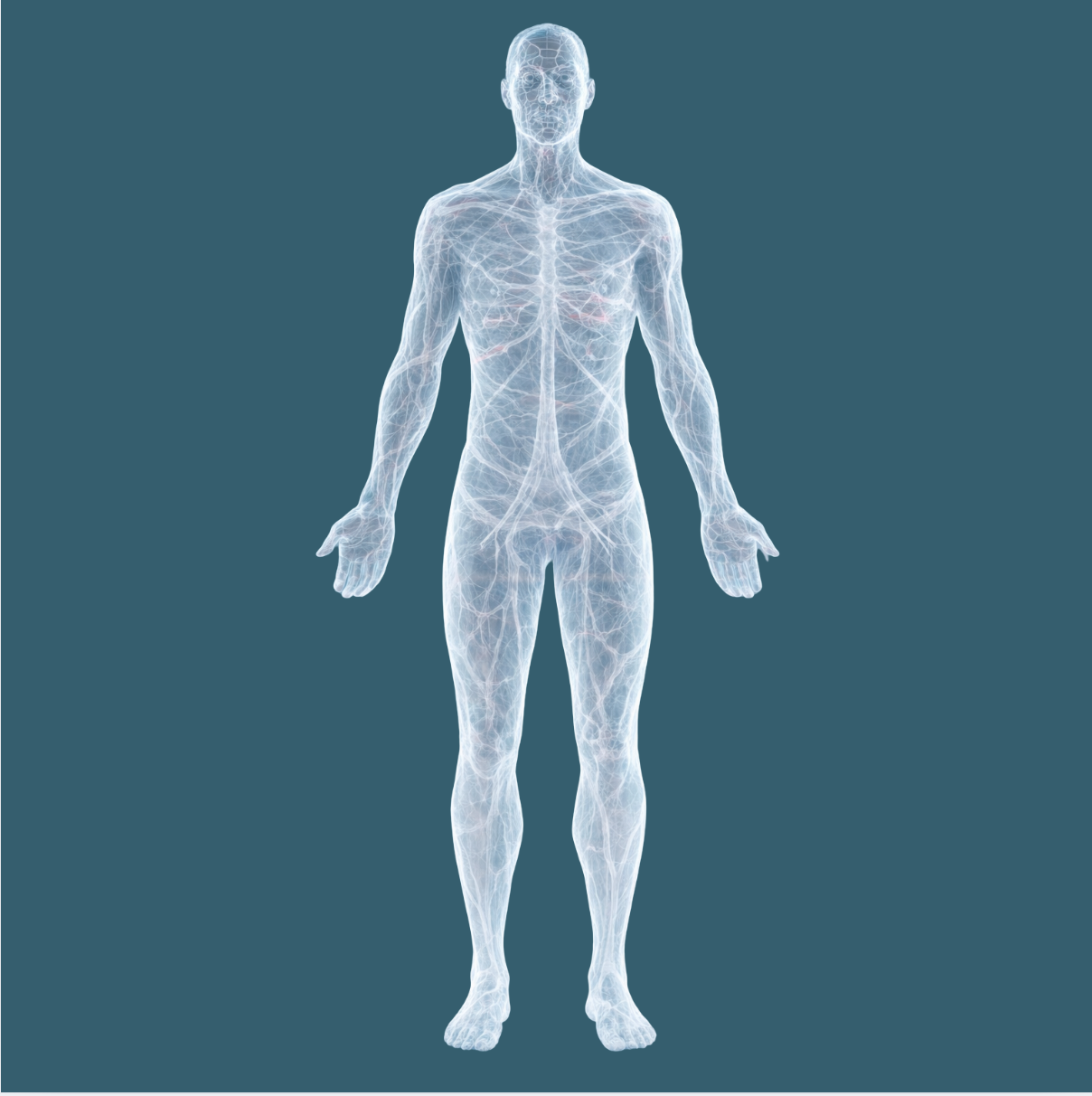
Scar tissue is not just something you see on the surface of the skin.
When surgery or injury occurs, the body lays down protective tissue to stabilize and repair the area. This tissue is denser and less elastic than healthy fascia. Over time, the surrounding fascial layers can bind, thicken, and lose their ability to glide.
Fascia is a continuous, three-dimensional web of connective tissue that surrounds muscles, bones, organs, nerves, and blood vessels. It connects everything.
So when fascia becomes restricted in one area, the effect is rarely local.
A scar can act like an anchor point in the system, subtly pulling on surrounding tissue and altering movement, posture, breathing, and load distribution throughout the body.
Why Abdominal Scars Often Show Up as Back Pain
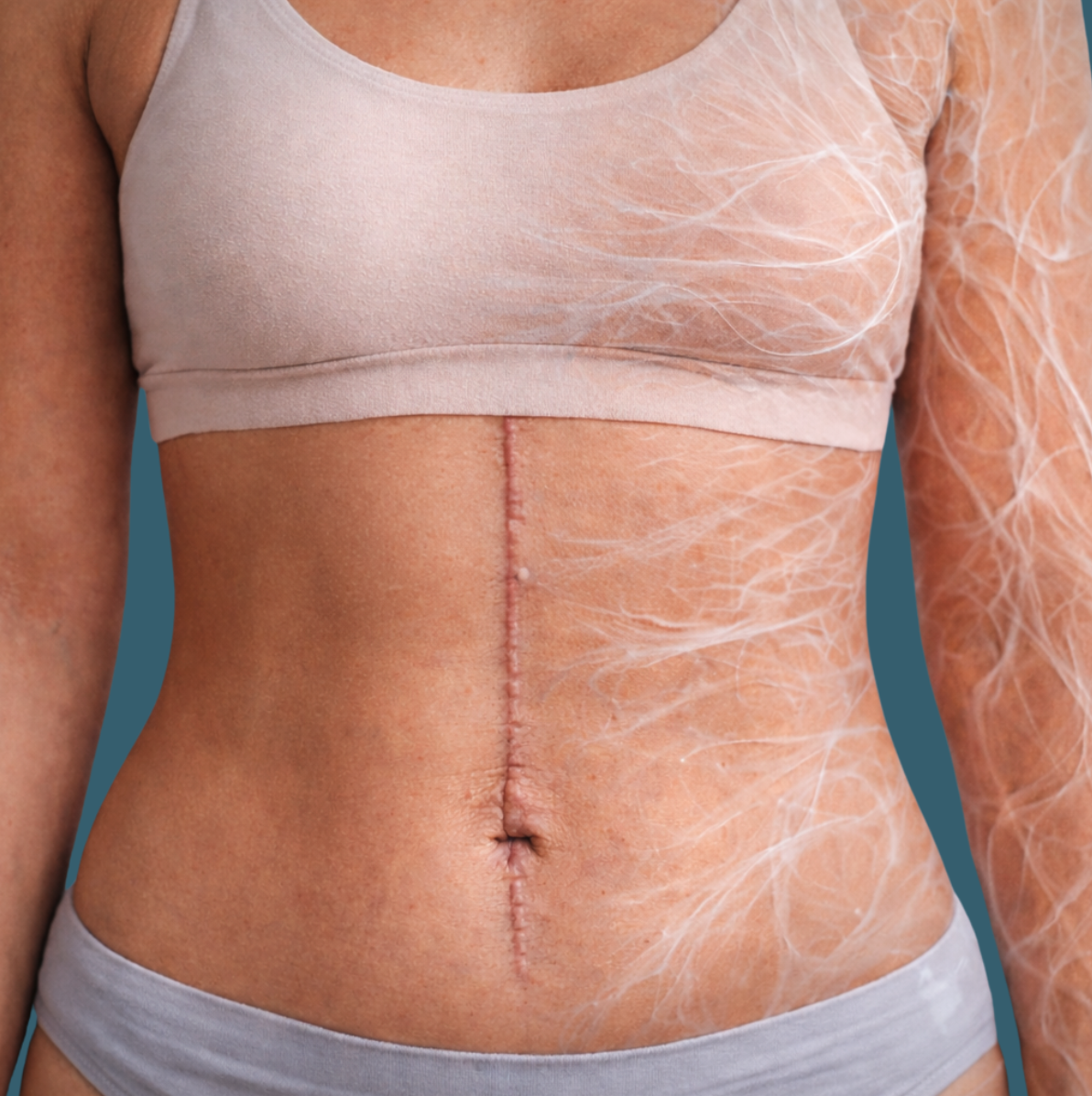
Abdominal scars are one of the most common — and most overlooked — contributors to chronic pain.
The abdomen plays a central role in:
Spinal movement and stability
Pelvic mechanics
Diaphragm function and breathing
Force transfer between the upper and lower body
When fascial layers in the abdomen become restricted, the body compensates.
Spinal segments may stiffen.
Hips may overwork.
The low back may absorb strain it was never designed to handle.
This is why so many people with a history of C-sections or abdominal surgery develop chronic low back or hip pain years later — even when the surgery itself was considered successful.
Compensation: The Body’s Quiet Adaptation
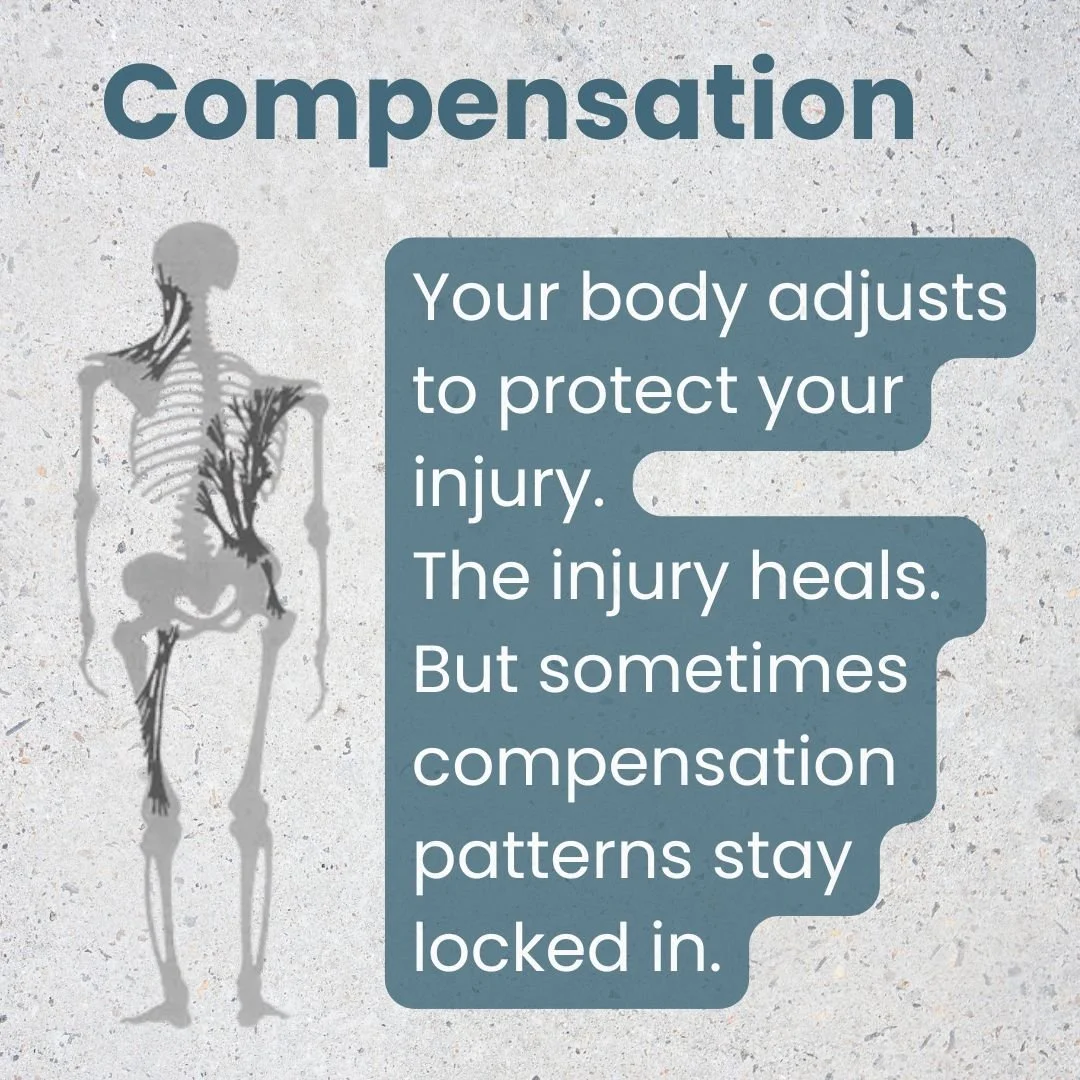
The body is incredibly intelligent.
When one area can’t move freely, another area moves more.
When one region becomes restricted, the system reorganizes around it.
This is called compensation.
At first, compensation works beautifully. Pain is minimal or nonexistent. Function is maintained.
But compensation comes at a cost.
Over time, tissues doing extra work become overloaded. Joints lose efficiency. Muscles brace. Fascia tightens further.
Eventually, the system reaches a tipping point — and pain appears.
Often far away from the original scar.
Why Pain Can Appear Years Later
Scar-related fascial restrictions don’t usually create immediate symptoms.
They change movement subtly.
They influence posture gradually.
They alter breathing patterns quietly.
The nervous system adapts, and the body keeps going — until it can’t.
This is why people often say:
“I’ve always had this scar, but the pain is new.”
“I healed from the surgery a long time ago.”
“Nothing shows up on imaging.”
Fascial tension patterns don’t typically appear on standard scans — but they are very real in the body.
This Is Personal for Me
My own journey into Myofascial Release began with pain that didn’t make sense.
I developed a deep sense of stuckness in my shoulder — something I couldn’t explain. Over time, it spread down my arm, along my side body, and into my hip. There was no injury. No single event I could point to.
Just a creeping intensity that slowly began to dominate how I moved and how I lived in my body.
Years later, through Myofascial Release, I learned that a surgical procedure I had more than 25 years earlier — to remove a blood clot from my armpit through the bend of my elbow, followed by a PFO heart closure — had created significant fascial restriction.
Those scars and the surrounding tissue had quietly limited the mobility of my shoulder complex. Over time, the restriction gained momentum, pulling along connected fascial lines and influencing my entire body.
What felt mysterious wasn’t random.
It was patterned.
It wasn’t until my scars - and the deeper, associated fascial restrictions - were gently and thoroughly treated that my body finally let go.
That was the moment I broke free from shoulder pain and long-held restriction.
And one of the reasons why I understand, on a deeply personal level, how profoundly this work can change someone’s life.
Why Myofascial Release Is So Effective for Scar-Related Pain
True Myofascial Release works with the fascial system rather than forcing change.
Using sustained, gentle pressure, this approach engages the deeper collagenous layers of fascia — where scar-related restrictions and long-held patterns live.
When applied skillfully, Myofascial Release can:
Soften and rehydrate dense scar tissue
Restore glide between bound fascial layers
Reduce abnormal tension pulling on distant areas
Improve communication between tissue and nervous system
Allow the body to reorganize around more efficient movement patterns
This work is rarely just about the scar itself.
It’s about how the entire body has adapted around it.
Why Gentle Work Matters
Scar tissue does not respond well to force.
Aggressive techniques often increase guarding, reinforcing the very patterns the body is trying to protect.
Myofascial Release creates change by offering:
Time
Sustained contact
A sense of safety for the nervous system
This allows the tissue to soften organically, rather than being pushed or overridden.
The Body Remembers - But It Can Change
Your body remembers surgeries, injuries, and medical interventions — even when your mind has moved on.
That doesn’t mean you’re destined to live with pain.
Fascia is adaptable.
Patterns can unwind.
Relief can come from addressing what’s been holding the system together — sometimes too tightly.
If you’re experiencing chronic or unexplained pain and have a history of surgery, your body is not broken. It may simply be responding to restrictions that were never fully addressed.
A Gentle Next Step
If you’re curious whether old scars may be contributing to your current pain, Myofascial Release offers a gentle, whole-body approach that works at the source — not just the symptoms.
For a deeper, research-based explanation of how scar tissue and fascia influence pain patterns throughout the body, read How Scar Tissue and Fascia Contribute to Whole-Body Pain
VerveBody Myofascial Release
Release your pain. Unleash your verve.
